
A quick note: I’m not a dermatologist; everything here comes from my own research, trial and error, and expert sources I’ve linked throughout. If you have a skin condition or you’re not sure what’s right for your skin, it’s always worth checking with a dermatologist before trying something new.
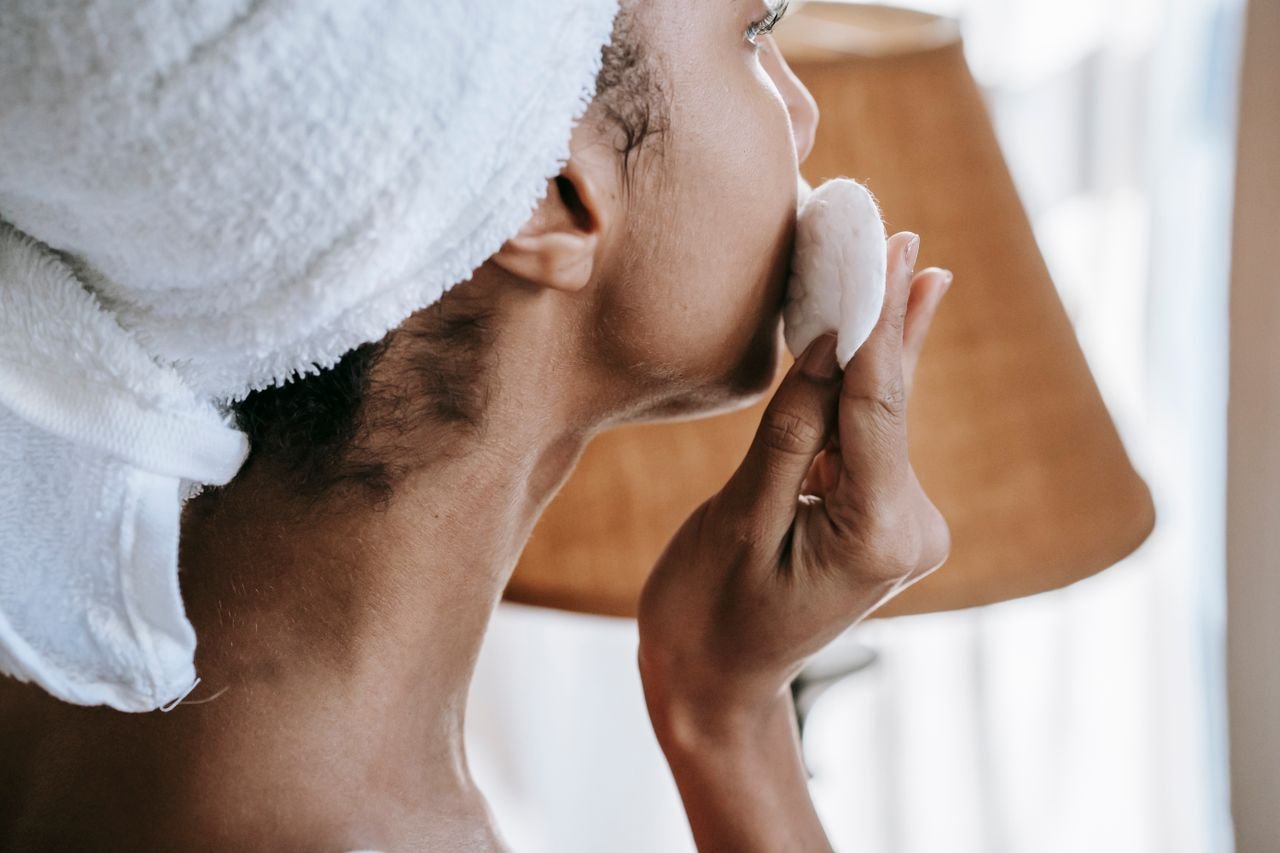
Toners have always had a reputation problem. Personally, when I was younger, they were just a stinging liquid that left my skin feeling so dry afterward; sometimes it burned, and most times my face just felt clean and ready for a moisturiser. A lot of us skipped it entirely once we found out that the stinging wasn’t doing much for our skin.
But toner today isn’t necessarily that. Somewhere along the way, it became one of the more useful steps in some skincare routines, while many people still treat it like an optional extra. If you’ve ever stood in the skincare aisle wondering what’s actually worth grabbing, this guide will help you find the best toner for your skin type without the burning.
A whole generation of us grew up misunderstanding what toners were actually for, so it was easy to misuse them. Modern toners can serve different purposes depending on the formula: some add hydration, some deliver ingredients such as acids or soothing agents, and others are designed to help control excess oil.
It’s also worth knowing that you don’t necessarily need a toner to keep your skin’s pH balanced. Washing raises your skin’s surface pH slightly, but a dermatology review on pH and skin cleansing notes that it returns to its normal acidic level on its own over time, which can take up to several hours. A toner can still be a useful step if you like what a particular formula does for your skin.
I didn’t know any of this for years. I just thought toner was a “nice-to-have” step people with more patience than me bothered with.
Let’s cut through the confusion and figure out how to choose the best toner for your skin type, whether you’re dealing with oiliness, dryness, sensitivity, or all three depending on the day.
Disclaimer: This post may contain affiliate links; see our disclaimer page here.
Table of Contents
Chapter 1: Do I Need a Toner? The “Wait and Watch” Test
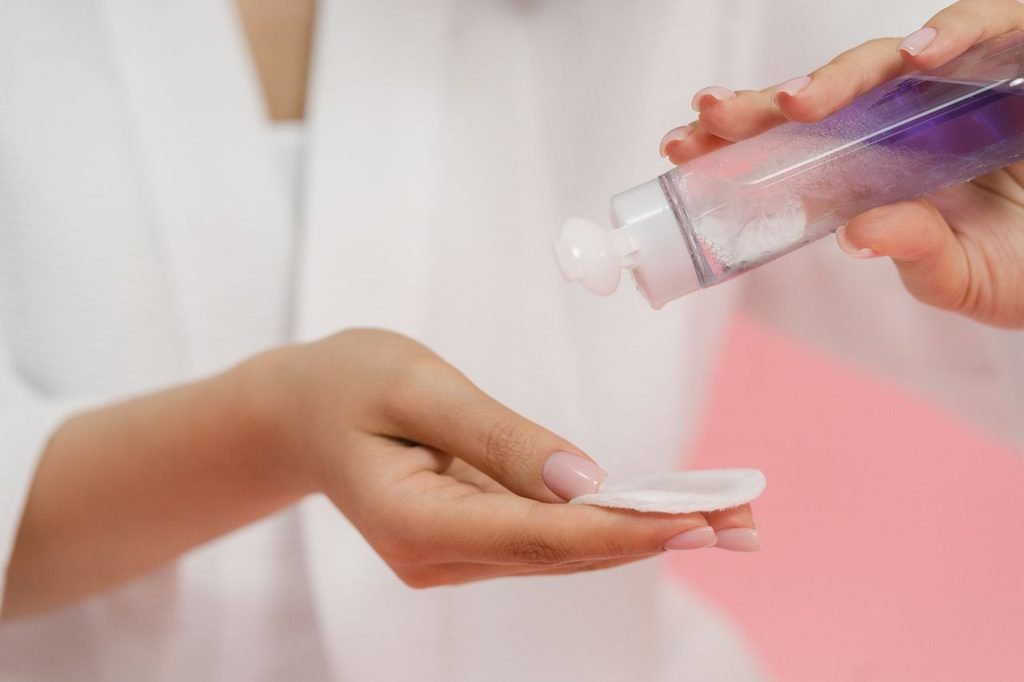
This test can help you get a better idea of what your skin may want before you spend money on a toner.
Cleanse your face as normal, then skip toner and every other product.
Pat dry with nothing else applied.
Wait 20-30 minutes.
Check in:
- Skin feels tight, maybe even a little itchy or flaky – you may prefer a hydrating toner, something that adds moisture rather than focusing on oil control.
- Skin looks shiny again, especially around the T-zone – an astringent or lightly exfoliating toner may be useful if your skin tolerates it without becoming dry or irritated.
- Skin feels fine, just slightly dull or rough – an exfoliating toner with mild acids could help with texture, but it’s not an essential step.
- Skin feels red, stings, or reacts to touch – skip active ingredients for now; you may prefer a soothing, fragrance-free toner or possibly no toner at all until your skin settles.
Bonus: take a close-up photo in natural light right after cleansing, before anything else. Zoom in – dry patches, shine, or redness show up more clearly than you’d expect just looking in a mirror.
Chapter 2: Toner Types Demystified: Finding the Best Toner for Your Skin Type
Here’s where we actually get into finding the best toner for your skin type, broken down by what your skin may be asking for.
1. Hydrating Toners: The Thirst Quenchers
Best for: Dry, dehydrated, or sensitive skin
Feels like: Watery to slightly milky, no sting, sinks in fast
Why it works: Humectants such as hyaluronic acid and glycerin can help attract and hold water in the skin.
My top picks:
- CeraVe Hydrating Toner: hyaluronic acid, ceramides, and niacinamide for a hydrating, barrier-supporting formula.
- Thayers Hydrating Milky Toner: snow mushroom and hyaluronic acid, designed to add moisture without feeling overly sticky.
Pro tip: If your skin still feels tight after applying toner, you may need more hydration from the rest of your routine rather than simply adding more toner. If your skin tolerates it, you can try a second thin layer.
2. Exfoliating Toners: The Texture Fixers
Best for: Dull, congested, or uneven-textured skin
Feels like: Watery, sometimes slightly tingly
Why it works: Ingredients such as glycolic acid, lactic acid, salicylic acid, or PHAs can help loosen dead skin cells and improve the appearance of texture.
My top pick:
- SK-II Facial Treatment Clear Lotion – a formula containing exfoliating ingredients that may appeal to people looking for gentle texture support.
Pro tip: Start with 2-3 times a week rather than daily. Even relatively gentle acids can cause irritation if you use them too frequently.
3. Soothing/Calming Toners: The Peacekeepers
Best for: Sensitive, reactive, or easily irritated skin
Feels like: Cooling, calming, almost nothing happening (which is the point)
Why it works: Ingredients such as centella asiatica and aloe are commonly used in soothing skincare formulas.
My top pick:
- SKIN1004 Centella Toning Toner – centella asiatica plus a gentle exfoliating ingredient for people who want both soothing and light texture support.
Pro tip: If your skin reacts to almost everything, patch test a new product on a small area first before using it all over your face.
4. Astringent/Balancing Toners: The Oil Control Squad
Best for: Oily or acne-prone skin and the appearance of enlarged pores
Feels like: Slightly tightening at first, but it shouldn’t sting or burn
Why it works: Ingredients such as witch hazel and niacinamide are often used in formulas aimed at oily skin and the appearance of pores. However, the overall formula matters, and astringent products can be drying for some people.
My top picks:
- WOWMD Witch Hazel Pore Perfecting Toner — witch hazel paired with sodium hyaluronate in a formula designed for oil control without excessive dryness.
- Paula’s Choice Pore-Reducing Toner – niacinamide plus hyaluronic acid for hydration and the appearance of pores.
Pro tip: If an oily-skin toner leaves your skin tight or flaky by the next morning, it may be too harsh for you. Oily skin can still benefit from hydration.
Chapter 3: Ingredients to Be Cautious With
1. Denatured Alcohol (Alcohol Denat, SD Alcohol)
Why: High concentrations of denatured alcohol can be drying or irritating for some people, particularly those with sensitive or already-dry skin.
Found in: Some older or strongly astringent “clarifying” and “refreshing” toner formulas. On ingredient lists it may appear as “SD Alcohol” followed by a number, or as “Alcohol Denat.” (the FDA explains the naming). Check the ingredient list rather than relying only on marketing claims.
2. Fragrance/Parfum
Why: Fragrance is a well-known cause of allergic skin reactions and can be irritating for some people, especially those with sensitive or reactive skin.
Found in: Many skincare products, including some formulas marketed as gentle.
3. Witch Hazel (with a caveat)
Why: Witch hazel isn’t automatically bad. The overall formula matters, and some people tolerate alcohol-free witch hazel products well. If your skin is dry or sensitive, however, you may prefer a simpler, more hydrating formula.
Found in: Many oil-control and pore-focused toner formulas.
4. Essential Oils (Citrus especially)
Why: Some essential oils can irritate sensitive skin, and dermatologists note that “natural” fragrances can trigger allergic reactions just like synthetic ones. Certain citrus oils, particularly the cold-pressed (expressed) kind, contain compounds called furanocoumarins that can react with sunlight and increase photosensitivity. “Natural” doesn’t automatically mean suitable for every skin type.
Found in: Some botanical or “clean” skincare formulas.
Chapter 4: How to Actually Apply Toner (Yes, You’ve Probably Been Doing It Wrong)
Even the best toner for your skin type won’t be very useful if you’re applying it in a way that irritates your skin.
Cotton Pad vs. Hands
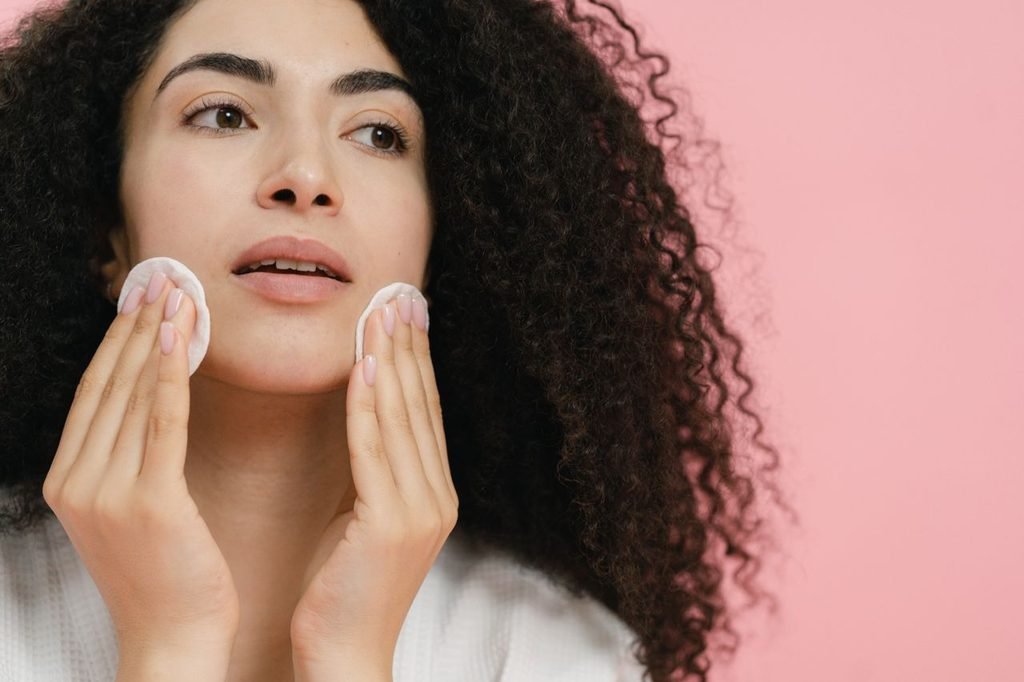
Most people default to a cotton pad because that’s what toner “always” came with growing up – swipe, done. But if you’re using a hydrating or soothing toner, applying it with clean hands can be a simple alternative.
If your toner is hydrating, soothing, or exfoliating, you can usually apply it with clean fingers and gently press it into your skin. This also avoids absorbing some of the product into a cotton pad.
Cotton pads can still make sense if you prefer them or if the product instructions specifically recommend them. With an exfoliating toner, follow the product’s directions carefully rather than assuming that more swiping means better results.
How Much Product (And How to Apply It)
A little can go a long way — follow the product’s directions rather than assuming you need a large amount. More product doesn’t necessarily mean better results; it can simply mean more waste or more irritation.
Pat, don’t rub. Rubbing or dragging toner across your face — especially around the eyes — creates unnecessary friction. Gently press the product into your skin instead.
Do You Need to Wait Before the Next Step?
Usually, you don’t need a long waiting period. Once the toner has absorbed and is no longer visibly wet, you can generally continue with the next step of your routine. If the product instructions say otherwise, follow those instead.
Chapter 5: Pro Tips You Won’t Find on the Bottle
1. The Multi-Toner Method
You don’t have to pick just one type. Some people layer products — for example, a hydrating toner followed by a targeted product — but more isn’t always better. If your skin is irritated, keeping your routine simple may be the better option.
If your skin is having an off week, lean soothing; if it’s looking dull, you could work in an exfoliating toner 2-3 times that week instead of using it daily.
2. Toner Isn’t Just for Morning/Night — It Can Be a Mid-Day Reset
A lightweight, alcohol-free toner in a small spray bottle can refresh skin midday, especially if you’re somewhere dry or air-conditioned all day. Not necessary, but it can be a nice-to-have if your skin tends to feel parched by afternoon.
3. Check the Ingredient List, Not the Marketing Label
“Alcohol-free” on the front doesn’t mean that every type of alcohol is absent. According to the FDA, products labeled “alcohol free” can still contain fatty alcohols such as cetyl and stearyl alcohol, which affect the skin very differently from ethyl alcohol and are commonly used as conditioning or texture-supporting ingredients. Flip the bottle and check the actual ingredient list if you’re unsure.
That’s really the whole point of finding the best toner for your skin type in the first place; it should fit what your skin needs rather than simply following a trend.
Chapter 6: Toner Hacks for Specific Issues
Sometimes finding the best toner for your skin type means going even more specific than ‘oily’ or ‘dry.’
For Acne-Prone Skin
AM: A salicylic-acid toner may help some people manage oil and clogged pores.
PM: A soothing toner may be preferable if your skin feels irritated from other active ingredients.
For Rosacea/Sensitivity
If you have rosacea or generally sensitive skin, fragrance-free, gentle formulas may be easier to tolerate. Exfoliating toners can irritate some people, even when they’re marketed as gentle. If you’re experiencing persistent redness, burning, or flare-ups, consider speaking with a dermatologist.
For Mature Skin
Hyaluronic acid and glycerin can help add hydration, while gentler exfoliating ingredients such as PHAs may be an option for people who want texture support. If your skin is particularly sensitive, introduce active ingredients gradually.
Final Verdict: Expensive vs. Drugstore
Splurge-worthy: If a product contains a specific ingredient or formula you particularly want to try.
Save your $$: Basic hydrating and soothing toners don’t necessarily need to be expensive. There are plenty of affordable formulas worth considering.
My #1 tip: Patch test any new toner, especially exfoliating ones, on a small area of skin before applying it to your whole face.
Conclusion: Your Next Steps to Balanced, Happy Skin
Choosing the best toner for your skin type comes down to actually paying attention, not to what’s trending, not to what worked for someone else’s skin, but to what yours is telling you right now. I wish someone had told me that back when I thought the sting meant it was working.
Related: The Ultimate Guide to Choosing the Best Face Cleanser for Your Skin Type
